
Tag: Lifestyle

  • The Internet Killed Boredom. Did It Kill Imagination Too?

    What happens when every quiet moment is replaced with a scroll? 

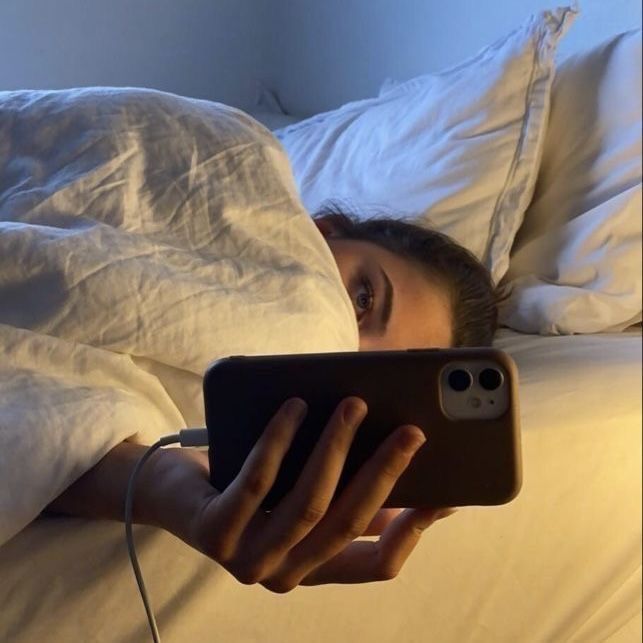
    I don’t remember the last time I was bored. I’ve always found a way to fill every empty moment. It’s either a show, movie, a video or just random doom scrolling. 

    I just cannot sit in silence.

    That made me question if we really just killed boredom or also killed imagination with it.

    Honestly, I don’t think so, because I am still the same imaginative person that I was as a child. So, as much as I don’t believe in this argument, I want to see it from both sides of the coin.

    What boredom looked like before the internet?

    Before the internet took over, boredom meant so many things like, staring out of the car window, waiting at doctor’s clinics, lying on the terrace watching clouds, making random stories in your head, doodling in notebooks or reading shampoo bottles in the bathroom 😂

    Boredom wasn’t empty. It was waiting for your brain to create something. 

    Anything.

    And I miss it.

    I miss being able to just sit in my pitch black room and just being in my thoughts. Creating random stories with stupid scenarios. Or think of myself as the lead in a movie and just narrate all the things I would have done. Pretend to be a singer and win an award (Let’s be fair we all have done this 😂).

    Today, boredom lasts about five seconds

    Every pause gets filled with the internet. No one wants to just be in the movement. 

    I mean we have done it, standing in line → Instagram, elevator → phone, sitting alone → YouTube, bathroom → scrolling, waiting for food → Reels. 

    This is our daily life now. 

    Even I do this, I could be out with my friends, and if we stop talking for 5 minutes, all of us whip our phones out and start scrolling. We don’t really talk anymore, just spend our days sharing reels. 

    When was the last time your brain had nothing to do?

    I don’t remember this… Do you?

    What constant stimulation changes

    Creativity

    I would like to think I am quite a creative person, I have a lot of ideas. Not just about writing or reading, but about art too. I am working on my drawing and painting skills, because I want to be able to draw. It seems so fun. 

    So, why is there such a lack of creativity today?

    When I tried to learn about it more, a few things stood out to me 

    Lack of original ideas : Ideas need quiet. If every empty moment is filled, your brain never wanders.

    True innovation happens when the mind is under-stimulated and forced to connect disparate concepts. Constant input fills that void with other people’s ideas, leading to derivative thinking. 

    Surface-level problem solving: The brain defaults to quick, algorithmic solutions found online rather than enduring the mental friction required to invent unique solutions.


    Fear of the blank page: Because the brain is unused to emptiness, starting a creative project from scratch feels overwhelming and anxiety-inducing rather than exciting.

    Reading

    Oh my god, this has to be my favourite thing ever. I love reading.

    I’ve loved reading since I was a child. I started out with children’s books, expanding to Fanfictions and then to actual published books. 

    I just love reading.

    Even though I do see people online talk a lot more about reading now (Well, this could just be my Instagram feed for all I know.. 😌), I still think people are still unaware. 

    And when I did a little digging why that could be, I found out a few things 

    Loss of deep linear focus: Continuous scrolling trains the eye to skim text vertically for keywords rather than tracking lines horizontally. This makes reading long-form books feel physically exhausting.

    Eroded narrative patience: Dense world-building and slow-developing plots feel boring because the brain expects immediate narrative payoffs every few seconds.

    Weakened visualization: Books ask you to imagine. Videos imagine for you. When screens instantly provide vivid images, the mental muscle used to construct characters, settings, and scenes from plain text atrophies.

    Hobbies

    Instead of making things, we consume other people making things. We look at the videos or lifestyle the other people are living, instead of doing things ourselves to get to where we want to be. 

    The more I looked into it, the more I realized it wasn’t just me 

    Abandonment of slow-skill tracking: Hobbies with steep learning curves (like woodworking, knitting, or learning an instrument) are often dropped because they do not offer immediate digital gratification. And some of the factors could be : 

    Performative engagement: Hobbies shift from private acts of joy to content creation, where the value of the activity is measured by views or likes rather than the process itself.

    Micro-niche burnout: Constant exposure to hyper-optimized, expert-level hobbyists online creates intimidation, causing beginners to quit before they build competence.

    Daydreaming

    This is something I have mastered a lot actually. 

    I daydream even when I am watching something, like a video, a show or a movie, or even reading a book. All I do is pause it for a minute, imagine what I would have done, daydream about it for a while and then get back to it. (Yes, I know it can sound weird for a 29-year-old 🙄)

    Those moments disappear when attention is constantly occupied. It turns out there’s actually a psychological explanation for this. 

    Extinction of the Default Mode Network: Daydreaming requires the brain to drop into a resting state to process memories and identity. Constant stimulation overrides this, completely eliminating idle thought.

    Loss of internal narrative: Instead of reflecting on personal experiences or imagining future scenarios, the mind’s inner monologue is replaced by a loop of recently consumed audio, memes, and videos.

    Decreased self-awareness: Without the quiet space of a daydream to untangle emotions, people become less connected to their own underlying feelings and motivations.

    Is boredom actually a skill?

    You know what, maybe boredom isn’t a problem. Maybe it’s a muscle we’ve stopped using.

    Children naturally invent games. Adults immediately unlock their phones.

    Boredom itself is not a skill, but tolerating and utilizing boredom is a critical psychological skill called “boredom tolerance.”

    In a world engineered for instant gratification, the ability to sit with emptiness without reaching for a distraction is a modern superpower that must be practiced and maintained.

    When you actively build this skill, it unlocks advanced cognitive abilities like deep focus, emotional regulation, and original creativity. A bored mind is forced to activate its “default mode network,” the brain state responsible for daydreaming, processing memories, and making unique creative connections. Without this necessary friction, the brain never learns to entertain itself, leading to short attention spans and a low tolerance for real-world delays.

    You can practice and rebuild this skill through small, daily moments of intentional emptiness. Try leaving your phone in your pocket while waiting in lines, washing the dishes without background audio, or commuting in complete silence. Choosing to endure these minor gaps of under-stimulation trains your brain to handle low-input environments, transforming boredom from an uncomfortable emotion into a powerful tool for mental clarity. 

    The irony

    We have more entertainment than any generation before us.

    Yet people constantly say

    “I don’t know what to do.”

    That’s a fascinating contradiction.

    This paradox is driven by choice overload, where an abundance of options leads directly to anxiety and indecision. 

    Before the digital age, people chose from just a few books, three TV channels, or a handful of physical games. 

    Today, opening a streaming service means browsing tens of thousands of titles, triggering a constant fear of making the wrong choice. This mental fatigue makes the act of selecting a task feel exhausting, causing people to scroll aimlessly for hours and ultimately conclude that there is nothing worth doing.

    When I try to open Netflix or Amazon, I just get so confused on what to watch. I have a lot of shows I was looking forward to watching, but then I just get so overwhelmed that I just stop, and exit and end up just doom scrolling instead.

    At the same time, instant digital entertainment has turned us into passive consumers rather than active creators. When stimulation is always available at the push of a button, the brain stops practicing the skill of initiation, which is the mental effort required to start a hobby, read a book, or invent a game. When faced with free time outside of a screen, the mind feels temporarily paralyzed because it has forgotten how to bridge the gap between emptiness and action without a digital prompt.

    Finally, continuous exposure to fast-paced content keeps the brain’s dopamine baseline unnaturally high, desensitizing our reward pathways. This constant hyper-stimulation raises the threshold for what we perceive as interesting, making traditional activities like cooking, practicing an instrument, or taking a walk feel incredibly dull. The exclamation that someone does not know what to do really means that nothing in their immediate physical environment can compete with the effortless dopamine rush of a smartphone.

    Conclusion

    Now, I won’t tell you to delete Instagram.

    Social media isn’t inherently bad. It helps us stay connected, learn new things, discover communities, and even find inspiration. The problem isn’t that these platforms exist. The problem is that they’ve become our default response to every empty moment.

    But wandering isn’t wasted time. It’s where ideas collide. 

    It’s where memories resurface. It’s where questions become stories, problems find solutions, and creativity quietly begins to grow. Some of your best thoughts will never compete with a feed that’s constantly demanding your attention.

    So, instead of reaching for your phone the next time you have ten spare minutes, try doing nothing.

    Look out the window.

    Watch people walk by.

    Let your thoughts drift wherever they want to go.

    It might feel strange at first. Maybe even uncomfortable. That’s okay. 

    You’re not failing at being productive. You’re simply making space for your own mind again.

    Because creativity rarely arrives when we’re consuming. It often arrives in the pauses between everything else.

    What if the next good idea you’re waiting for is hiding inside ten minutes of silence?

    What if the answer to a problem you’ve been trying to solve isn’t another video, another post, or another podcast, but a conversation with your own thoughts?

    Maybe boredom was never something to escape.

    Maybe it was the doorway to curiosity.

    Maybe it was the quiet place where your mind could finally hear itself.

    And maybe imagination was never gone.

    It was just waiting for you to stop scrolling long enough to find it again.

    Let me know your thoughts below 👇🏻💕


  • Hyper-Independence: When Strength Becomes a Survival Mechanism

    Understanding why some people find it easier to carry every burden alone than to ask for support.

    I am a hyper-independent woman myself. All my life I thought I really didn’t need anyone else.
    Don’t need to ask for help, in fact offering others my help without even looking for anything in return.
    I always thought it’s badass that I am so independent and don’t need others at all, and I can do things by myself.
    But turns out, it’s a trauma!! 🎉
    You are telling me that I am traumatised to the point I don’t ask for anything from people?
    Well that kinda checks out…
    I was recently thinking about a chat I had with my best friends, where I in a way very proudly said, “I don’t really ask people for anything at all, I cannot ask people for help. I don’t think I need it much. I can’t even ask my own mother for money, even if I need it.” My friends had a really valid concern on their faces.
    At that time, I didn’t think it was such a huge deal, and then I came across a psychologist on Instagram, who was talking about how hyper-independence in people is a trauma response.
    And I decided to dig deep…
    I did a lot of research and all I found out was that I have issues. A lot of issues that need to be addressed someday.
    So, I am gonna do it one at a time. 😀

    What is hyper-independence?
    It’s definitely not a personality trait. It’s not good either.
    According to Google: “It is an extreme, unwavering insistence on self-reliance where a person is unable or unwilling to depend on others, even in times of dire need. Far from just being highly capable, it is a psychological defense mechanism where doing everything alone feels like the only way to stay safe.”

    And that made me question:

    Why do people develop Hyper-independence?
    Why does one’s brain choose this path as a survival instinct?
    Here are some major reasons, with enough depth to build a blog or research from.
    1. Childhood Emotional Neglect
    One of the most common causes.
    A child doesn’t necessarily need to be physically neglected. Emotional neglect happens when their feelings, fears, or needs are consistently ignored, dismissed, or minimized.
    Examples:
    “Stop crying.”
    “You’re too sensitive.”
    “Deal with it yourself.”
    Over time, the child learns that no one is coming to help me. I have to handle everything on my own. As an adult, asking for help can feel uncomfortable or even shameful.

    1. Parentification (Growing Up Too Fast)
    Some children become caregivers long before they’re emotionally ready.
    They may:
    Take care of younger siblings.
    Mediate fights between parents.
    Become their mother’s emotional support.
    Manage household responsibilities.
    Worry about finances.
    Instead of being cared for, they become the caretaker. As adults, they often feel responsible for everyone else’s well-being while neglecting their own.

    1. Growing Up in an Unpredictable or Unsafe Environment
    If home life was chaotic because of conflict, addiction, abuse, frequent criticism, or instability, children often learn that depending on others is risky.
    Hyper-independence becomes a way to create control.
    The mindset becomes:
    “If I rely on no one, no one can disappoint or hurt me.”

    1. Repeated Betrayal or Broken Trust
    Sometimes hyper-independence develops later in life.
    Experiences such as:
    Being cheated on.
    Friends abandoning them.
    Family members breaking promises.
    Being repeatedly let down.
    can create the belief that trusting people only leads to pain. Instead of risking disappointment again, they decide to rely only on themselves.

    1. Being Rewarded for Being “The Strong One”
    Many children receive praise not for expressing emotions but for suppressing them.
    People say:
    “You’re so mature.”
    “You’re the responsible one.”
    “You’re the strong child.”
    While these sound like compliments, they can teach someone that their value comes from being capable rather than being cared for.
    Eventually, vulnerability feels like failure.

    1. Cultural and Gender Expectations
    Many societies encourage girls to be self-sacrificing, emotionally responsible, and resilient. At the same time, asking for help may be interpreted as:
    Weakness.
    Failure.
    Being a burden.
    In other contexts, boys may be taught that expressing vulnerability is unmanly. Although the expectations differ, both can contribute to hyper-independence.
    The result is people who struggle to receive support, even when they desperately need it.

    1. Fear of Being a Burden
    Some people grow up believing their needs inconvenience others.
    They may have heard:
    “Don’t trouble people.”
    “Handle it yourself.”
    “Everyone has their own problems.”
    As adults, they apologize for needing help and often stay silent even when they’re overwhelmed.

    1. Perfectionism
    Hyper-independence often goes hand in hand with perfectionism.
    People may think:
    “No one can do it as well as I can.”
    “If I want it done right, I’ll do it myself.”
    While this can lead to high achievement, it also creates chronic stress, exhaustion, and difficulty delegating.

    1. Fear of Rejection or Vulnerability
    Accepting help requires trust. For someone who fears rejection, asking for help can feel like exposing themselves to possible criticism or abandonment. It’s emotionally safer to struggle alone than risk hearing:
    “No.”

    1. Trauma
    Whether from childhood or adulthood, traumatic experiences can change how someone views the world. Hyper-independence can become a survival strategy because it creates an illusion of safety.
    The belief becomes:
    “If I control everything myself, I won’t be hurt again.”

    1. Low Self-Worth
    Some people don’t believe they deserve care.
    They may think:
    “Other people deserve help more than I do.”
    “I should be able to handle this.”
    “My problems aren’t important.”
    They freely support others but deny themselves the same compassion.

    1. Confusing Independence with Self-Worth
    Many people grow up equating independence with success. Being independent is healthy. Believing you must never need anyone is not.
    Healthy independence says:
    I can take care of myself, and I can ask for help when I need it.
    Hyper-independence says:
    If I need help, I’ve failed.

    Hyper-Independence might look like freedom, but it slowly becomes a cage built for protection.

    How Do People Develop Hyper-Independence?
    1. They Learn That Their Needs Won’t Be Met
    Hyper-independence often begins when someone repeatedly reaches out for comfort, support, or reassurance and doesn’t receive it.
    Instead of learning that it’s safe to depend on others, they begin to expect disappointment. Over time, they stop expressing their needs altogether, convincing themselves that relying on others only leads to frustration or hurt.
    The belief becomes:
    “If no one is going to help me, I need to learn to do everything myself.”

    1. They Start Solving Problems Alone
    Once people stop expecting support, they begin handling every challenge independently. Whether it’s emotional pain, financial struggles, schoolwork, or family responsibilities, they teach themselves to cope without asking for assistance.
    At first, this feels empowering. Over time, it becomes their default way of functioning. Eventually, asking for help feels unfamiliar, uncomfortable, or even impossible.

    1. Self-Reliance Gets Reinforced
    Every time they successfully manage a difficult situation alone, their brain receives confirmation that independence is the safest option.
    They begin associating self-reliance with survival. The more they cope alone, the harder it becomes to imagine depending on anyone else.

    1. They Build Emotional Walls
    As disappointment accumulates, people often protect themselves by becoming emotionally guarded. They stop sharing vulnerable thoughts, avoid discussing their struggles, and become uncomfortable with emotional dependence.
    This isn’t because they don’t want connection. It’s because emotional distance feels safer than risking rejection or disappointment.

    1. Independence Becomes Part of Their Identity
    Eventually, hyper-independence stops being a coping strategy and becomes part of how they see themselves.
    They begin describing themselves as:
    “I’m just very independent.”
    “I don’t need anyone.”
    “I’ve always handled things on my own.”
    What started as a survival response gradually becomes a core part of their identity.

    1. They Mistake Isolation for Strength
    Because they have survived by relying on themselves, they may begin to believe that needing others is a sign of weakness.
    They pride themselves on carrying everything alone, even when it comes at the cost of their mental health, relationships, or well-being.
    Strength becomes measured by how much they can endure in silence.

    1. They Feel Guilty When Others Help Them
    Over time, receiving support can feel more uncomfortable than giving it.
    They may:
    Minimize their own struggles.
    Decline offers of help.
    Feel indebted when someone does something for them.
    Rush to “repay” kindness immediately.
    Instead of experiencing support as comforting, they experience it as something they have to earn or compensate for.

    1. The Cycle Becomes Self-Perpetuating
    Because they rarely ask for help, people assume they don’t need it.
    As a result, others stop offering support, which reinforces their belief that they can only rely on themselves.
    Without realizing it, they create a cycle where their independence keeps confirming the very belief that caused it in the first place.

    How does one heal from it?
    1. Redefine What Strength Means
    Many hyper-independent people equate strength with handling everything alone. Healing begins by challenging that definition.
    True strength isn’t measured by how much you can carry by yourself. It’s measured by your ability to recognize when you need support, adapt to challenges, and build healthy interdependence.
    Instead of asking,
    “Can I do this alone?”
    Ask,
    “Do I have to?”

    1. Learn to Receive Without Feeling Guilty
    Giving often feels natural. Receiving can feel uncomfortable. Practice accepting small acts of kindness without immediately trying to repay them.
    For example:
    Let someone buy you coffee.
    Accept a compliment with a simple “Thank you.”
    Let a friend help you move or run an errand.
    Receiving support isn’t taking advantage of people. It’s allowing relationships to be mutual rather than one-sided.

    1. Build Trust Gradually
    Healing doesn’t require trusting everyone overnight.
    Start by identifying people who have consistently shown reliability, honesty, and respect.
    Share something small before sharing something deeply personal.
    Trust is built through repeated positive experiences, not blind faith.

    1. Practice Asking for Small Favors
    If asking for help feels overwhelming, start with low-stakes requests.
    Examples:
    Ask someone for advice.
    Request feedback on your work.
    Let a colleague explain something instead of figuring it out alone.
    Each positive experience teaches your nervous system that asking for help doesn’t always lead to rejection or disappointment.

    1. Separate Independence From Isolation
    Being independent doesn’t mean refusing connection.
    Healthy independence allows you to:
    Make your own decisions.
    Support yourself financially or emotionally.
    Maintain your identity.

    Healthy connection allows you to:
    Lean on others during difficult times.
    Share responsibilities.
    Experience mutual care.

    The goal isn’t dependence. It’s balance.

    1. Become Aware of Your Automatic Responses
    Hyper-independence often operates on autopilot. Notice the moments when you instantly think:
    “I’ll just do it myself.”
    “It’s easier if I don’t ask.”
    “I don’t want to bother anyone.”
    Pause before acting.
    Ask yourself:
    “Am I choosing this because it’s genuinely the best option, or because it’s my default response?”
    Awareness creates room for different choices.

    1. Allow Yourself to Be Seen
    Many hyper-independent people let others see their achievements but hide their struggles.
    Healing involves letting trusted people witness not only your successes but also your fears, uncertainties, and moments of vulnerability. Connection deepens when people know the real you, not just the capable version of you.

    1. Stop Treating Rest as Something You Have to Earn
    People who are used to carrying everything often believe they deserve rest only after they’ve finished every task.
    But there will always be another task.
    Recovery isn’t a reward for productivity. It’s a basic human need that protects your physical and emotional well-being.

    1. Accept That Interdependence Is Healthy
    Psychologists often distinguish between dependence, independence, and interdependence.
    Dependence means relying entirely on others.
    Hyper-independence means relying only on yourself.
    Interdependence is the healthy middle ground, where people remain capable while also giving and receiving support.
    Most healthy relationships thrive in this middle ground.

    1. Be Patient With Yourself
    Hyper-independence often develops over many years. It won’t disappear after a few vulnerable conversations. There may be moments when asking for help still feels uncomfortable or exposing.
    That doesn’t mean you’re failing.
    Healing is less about becoming a different person and more about expanding your comfort zone, one small step at a time.

    🍁Conclusion.
    It is not a disease that needs to be cured, nor is it a problem that needs fixing.
    Hyper-independence may look like confidence from the outside, but for many people, it is a survival strategy born from experiences that taught them they could only rely on themselves. While being independent is a valuable quality, believing you must carry every burden alone can leave you emotionally exhausted and disconnected from the very support that helps us thrive. Healing doesn’t mean giving up your independence or becoming dependent on others. It means learning that strength and vulnerability can coexist. It’s about allowing yourself to trust, accept help, set healthy boundaries, and recognize that your worth has never been measured by how much you can endure in silence. You deserve relationships where care is mutual, support is freely given, and you don’t have to prove your strength by facing every challenge alone.

    I know now why I am like this and honestly, I am working on it. I hope you have found the reason too!!

    Let me know your thoughts below! 👇🏻💕


  • What are the biggest benefits of minimalist living?

    Daily writing prompt
    What are the biggest benefits of minimalist living?

    I personally love a minimalist life, I love having financial freedom and more time and energy for things I want to do instead of doing everything at once.

    It in a way also made me more discipline. I hope I am able to follow it more with my job and writing both!!


  • What does freedom mean to you?

    Daily writing prompt
    What does freedom mean to you?

    To be free, free to do whatever I want.

    I don’t know why and how I became so hyper-independent and so focused on just me, but this is what freedom feels like, at least to me. Just living my life, working, going out with friends, travelling, taking care of my mental health, working on myself, and just self care as a whole.

    It’s such an amazing feeling when you have no one to give you stress and anxiety. No one who questions you, no one you value you more than yourself, I am so at peace right now, that the thought of getting into a relationship is kinds scary to me because what if he messes with my peace?

    I just love living life for myself and with myself so much. I have found serenity in myself.


  • A Quiet Year That Changed Me : What I learned when nothing went as planned

    If I had to describe 2025 in one line, I’d say this: it opened my eyes and forced me to reflect. Not in a dramatic, life-altering way, but in a slow, honest way. The kind that stays with you even when nothing big seems to be happening.

    At the beginning of the year, I thought love and a promotion would be part of my story. They weren’t. And oddly enough, I’m not sad about that. I didn’t feel robbed or behind. I just felt… okay. Like maybe life was asking me to focus on something else instead of chasing timelines that weren’t mine.

    One of the biggest decisions I made this year was writing my first short story. It wasn’t a loud announcement or a sudden burst of confidence. It was quiet and personal. I just decided to do it. That choice mattered to me because it reminded me that I don’t have to wait for the perfect moment or validation to start something I care about.

    What really exhausted me in 2025 was a pattern. The kind you don’t notice until you’ve repeated it enough times to feel tired of yourself. Once I saw it clearly, I couldn’t ignore it anymore. And once I couldn’t ignore it, I knew it had to change.

    I’m quietly proud of how much more at peace I feel now. I’m clearer. I don’t feel as pulled in different directions. I’ve started letting go of expectations, especially the ones that weren’t even mine to carry. I also became more aware of my habits, the good ones and the ones that were holding me back without me realizing it.

    This year also taught me something very real about work, money, and ambition. Wanting more means working harder. There’s no escaping that. No shortcuts that don’t eventually catch up to you. If I want a different life, I have to be willing to put in consistent effort, even when it feels slow and invisible.

    Being single this year didn’t make me feel lonely or lacking. It taught me that I don’t have to be sad about it. I’m becoming my best self in my own time. Love doesn’t need to arrive right now for my life to still feel meaningful. Everyone has their own timing, and mine just isn’t here yet.

    One belief I finally let go of in 2025 is the idea that I’m useless. I’m not. I’m hardworking. I show up. I try, even when things don’t immediately work out. I’m content in ways I didn’t expect, and that matters more than I used to admit.

    As I step into 2026, I’m carrying my confidence and clarity with me. I’m leaving behind unnecessary doubt and habits that don’t serve the person I’m becoming. 2025 didn’t give me everything I thought I wanted, but it gave me something solid. And for the first time in a while, that feels enough.

    Happy New Year !!! 🎊🎉🩷🙏🏻

    What do you think your 2025 went? Let me know your thoughts below 👇🏻💕