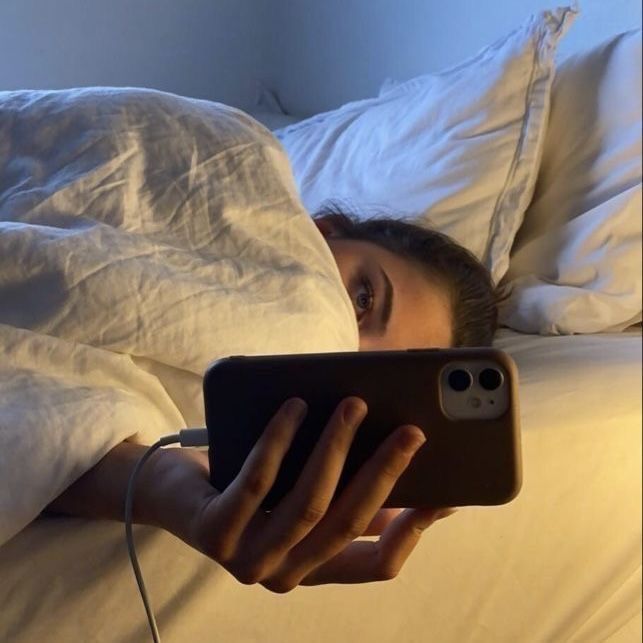

What happens when every quiet moment is replaced with a scroll?
I don’t remember the last time I was bored. I’ve always found a way to fill every empty moment. It’s either a show, movie, a video or just random doom scrolling.
I just cannot sit in silence.
That made me question if we really just killed boredom or also killed imagination with it.
Honestly, I don’t think so, because I am still the same imaginative person that I was as a child. So, as much as I don’t believe in this argument, I want to see it from both sides of the coin.
What boredom looked like before the internet?
Before the internet took over, boredom meant so many things like, staring out of the car window, waiting at doctor’s clinics, lying on the terrace watching clouds, making random stories in your head, doodling in notebooks or reading shampoo bottles in the bathroom 😂
Boredom wasn’t empty. It was waiting for your brain to create something.
Anything.
And I miss it.
I miss being able to just sit in my pitch black room and just being in my thoughts. Creating random stories with stupid scenarios. Or think of myself as the lead in a movie and just narrate all the things I would have done. Pretend to be a singer and win an award (Let’s be fair we all have done this 😂).
Today, boredom lasts about five seconds
Every pause gets filled with the internet. No one wants to just be in the movement.
I mean we have done it, standing in line → Instagram, elevator → phone, sitting alone → YouTube, bathroom → scrolling, waiting for food → Reels.
This is our daily life now.
Even I do this, I could be out with my friends, and if we stop talking for 5 minutes, all of us whip our phones out and start scrolling. We don’t really talk anymore, just spend our days sharing reels.
When was the last time your brain had nothing to do?
I don’t remember this… Do you?
What constant stimulation changes
Creativity
I would like to think I am quite a creative person, I have a lot of ideas. Not just about writing or reading, but about art too. I am working on my drawing and painting skills, because I want to be able to draw. It seems so fun.
So, why is there such a lack of creativity today?
When I tried to learn about it more, a few things stood out to me
Lack of original ideas : Ideas need quiet. If every empty moment is filled, your brain never wanders.
True innovation happens when the mind is under-stimulated and forced to connect disparate concepts. Constant input fills that void with other people’s ideas, leading to derivative thinking.
Surface-level problem solving: The brain defaults to quick, algorithmic solutions found online rather than enduring the mental friction required to invent unique solutions.
Fear of the blank page: Because the brain is unused to emptiness, starting a creative project from scratch feels overwhelming and anxiety-inducing rather than exciting.
Reading
Oh my god, this has to be my favourite thing ever. I love reading.
I’ve loved reading since I was a child. I started out with children’s books, expanding to Fanfictions and then to actual published books.
I just love reading.
Even though I do see people online talk a lot more about reading now (Well, this could just be my Instagram feed for all I know.. 😌), I still think people are still unaware.
And when I did a little digging why that could be, I found out a few things
Loss of deep linear focus: Continuous scrolling trains the eye to skim text vertically for keywords rather than tracking lines horizontally. This makes reading long-form books feel physically exhausting.
Eroded narrative patience: Dense world-building and slow-developing plots feel boring because the brain expects immediate narrative payoffs every few seconds.
Weakened visualization: Books ask you to imagine. Videos imagine for you. When screens instantly provide vivid images, the mental muscle used to construct characters, settings, and scenes from plain text atrophies.
Hobbies
Instead of making things, we consume other people making things. We look at the videos or lifestyle the other people are living, instead of doing things ourselves to get to where we want to be.
The more I looked into it, the more I realized it wasn’t just me
Abandonment of slow-skill tracking: Hobbies with steep learning curves (like woodworking, knitting, or learning an instrument) are often dropped because they do not offer immediate digital gratification. And some of the factors could be :
Performative engagement: Hobbies shift from private acts of joy to content creation, where the value of the activity is measured by views or likes rather than the process itself.
Micro-niche burnout: Constant exposure to hyper-optimized, expert-level hobbyists online creates intimidation, causing beginners to quit before they build competence.
Daydreaming
This is something I have mastered a lot actually.
I daydream even when I am watching something, like a video, a show or a movie, or even reading a book. All I do is pause it for a minute, imagine what I would have done, daydream about it for a while and then get back to it. (Yes, I know it can sound weird for a 29-year-old 🙄)
Those moments disappear when attention is constantly occupied. It turns out there’s actually a psychological explanation for this.
Extinction of the Default Mode Network: Daydreaming requires the brain to drop into a resting state to process memories and identity. Constant stimulation overrides this, completely eliminating idle thought.
Loss of internal narrative: Instead of reflecting on personal experiences or imagining future scenarios, the mind’s inner monologue is replaced by a loop of recently consumed audio, memes, and videos.
Decreased self-awareness: Without the quiet space of a daydream to untangle emotions, people become less connected to their own underlying feelings and motivations.
Is boredom actually a skill?
You know what, maybe boredom isn’t a problem. Maybe it’s a muscle we’ve stopped using.
Children naturally invent games. Adults immediately unlock their phones.
Boredom itself is not a skill, but tolerating and utilizing boredom is a critical psychological skill called “boredom tolerance.”
In a world engineered for instant gratification, the ability to sit with emptiness without reaching for a distraction is a modern superpower that must be practiced and maintained.
When you actively build this skill, it unlocks advanced cognitive abilities like deep focus, emotional regulation, and original creativity. A bored mind is forced to activate its “default mode network,” the brain state responsible for daydreaming, processing memories, and making unique creative connections. Without this necessary friction, the brain never learns to entertain itself, leading to short attention spans and a low tolerance for real-world delays.
You can practice and rebuild this skill through small, daily moments of intentional emptiness. Try leaving your phone in your pocket while waiting in lines, washing the dishes without background audio, or commuting in complete silence. Choosing to endure these minor gaps of under-stimulation trains your brain to handle low-input environments, transforming boredom from an uncomfortable emotion into a powerful tool for mental clarity.
The irony
We have more entertainment than any generation before us.
Yet people constantly say
“I don’t know what to do.”
That’s a fascinating contradiction.
This paradox is driven by choice overload, where an abundance of options leads directly to anxiety and indecision.
Before the digital age, people chose from just a few books, three TV channels, or a handful of physical games.
Today, opening a streaming service means browsing tens of thousands of titles, triggering a constant fear of making the wrong choice. This mental fatigue makes the act of selecting a task feel exhausting, causing people to scroll aimlessly for hours and ultimately conclude that there is nothing worth doing.
When I try to open Netflix or Amazon, I just get so confused on what to watch. I have a lot of shows I was looking forward to watching, but then I just get so overwhelmed that I just stop, and exit and end up just doom scrolling instead.
At the same time, instant digital entertainment has turned us into passive consumers rather than active creators. When stimulation is always available at the push of a button, the brain stops practicing the skill of initiation, which is the mental effort required to start a hobby, read a book, or invent a game. When faced with free time outside of a screen, the mind feels temporarily paralyzed because it has forgotten how to bridge the gap between emptiness and action without a digital prompt.
Finally, continuous exposure to fast-paced content keeps the brain’s dopamine baseline unnaturally high, desensitizing our reward pathways. This constant hyper-stimulation raises the threshold for what we perceive as interesting, making traditional activities like cooking, practicing an instrument, or taking a walk feel incredibly dull. The exclamation that someone does not know what to do really means that nothing in their immediate physical environment can compete with the effortless dopamine rush of a smartphone.
Conclusion
Now, I won’t tell you to delete Instagram.
Social media isn’t inherently bad. It helps us stay connected, learn new things, discover communities, and even find inspiration. The problem isn’t that these platforms exist. The problem is that they’ve become our default response to every empty moment.
But wandering isn’t wasted time. It’s where ideas collide.
It’s where memories resurface. It’s where questions become stories, problems find solutions, and creativity quietly begins to grow. Some of your best thoughts will never compete with a feed that’s constantly demanding your attention.
So, instead of reaching for your phone the next time you have ten spare minutes, try doing nothing.
Look out the window.
Watch people walk by.
Let your thoughts drift wherever they want to go.
It might feel strange at first. Maybe even uncomfortable. That’s okay.
You’re not failing at being productive. You’re simply making space for your own mind again.
Because creativity rarely arrives when we’re consuming. It often arrives in the pauses between everything else.
What if the next good idea you’re waiting for is hiding inside ten minutes of silence?
What if the answer to a problem you’ve been trying to solve isn’t another video, another post, or another podcast, but a conversation with your own thoughts?
Maybe boredom was never something to escape.
Maybe it was the doorway to curiosity.
Maybe it was the quiet place where your mind could finally hear itself.
And maybe imagination was never gone.
It was just waiting for you to stop scrolling long enough to find it again.
Let me know your thoughts below 👇🏻💕
 Ladyink with love
Leave a comment